
Key Takeaways:
- Auto translation tools are revolutionizing global communication by providing real-time, accurate translations across multiple languages.
- These tools enhance accessibility in sectors like education, healthcare, and business, fostering inclusivity and understanding.
- While advancements are significant, challenges such as cultural nuances and contextual accuracy remain, necessitating human oversight.
Table of Contents:
- Introduction
- Advancements in Auto Translation Technology
- Impact on Global Communication
- Applications in Various Sectors
- Challenges and Limitations
- The Future of Auto Translation Tools
- Conclusion
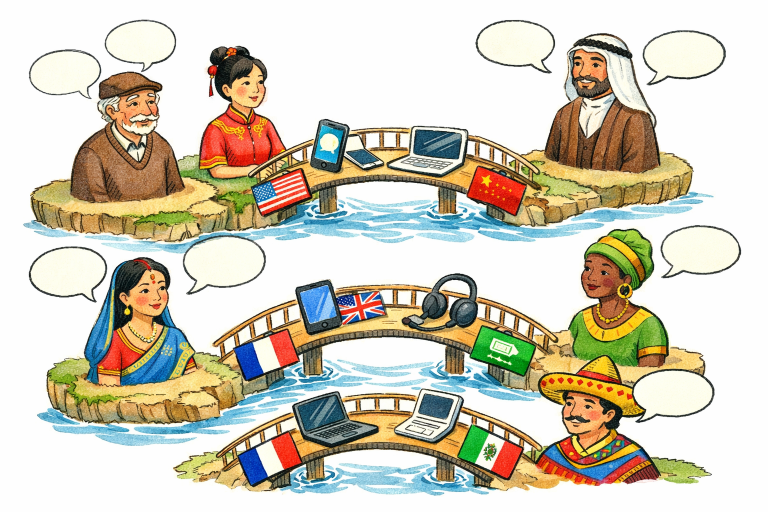
The rapid pace of globalization has made cross-cultural communication not merely advantageous but essential. For businesses, schools, hospitals, and even everyday users, the ability to seamlessly interact across languages defines access, opportunity, and inclusivity. Auto translation tools now serve as critical bridges, removing many of the obstacles that traditionally hindered real-time global conversation. Technologies like real-time translation and powerful language models empower users to connect instantly and efficiently. Whether you need an image translator for documents or an app to talk to someone across the world, these tools are simplifying communication at a scale unimaginable just a decade ago.
Auto translation goes beyond simple word-for-word swaps. Innovations in artificial intelligence and deep learning allow these systems to process the context, tone, and intent of a message. As these tools become more accurate, they dramatically reduce the friction of international collaboration and understanding, reshaping the way people work, learn, and access resources. This accessibility is vital in a world that increasingly values diversity and interconnectedness.
Advancements in Auto Translation Technology
Auto translation technology has grown well beyond its earliest iterations. Artificial intelligence and neural machine translation now support far more context-aware and natural translations. For example, Google’s live translation technology can process over 70 languages and is integrated into everyday devices such as earbuds and smartphones. Companies like Microsoft and Apple are also building advanced translation features into their products, enabling more natural conversation and collaboration across language barriers, as highlighted by this PhoneArena report.
Research continues to address challenges formerly limiting these systems, such as understanding context and idiomatic phrases. Modern systems learn from massive data sets, analyze cultural intricacies, and quickly adapt to new terminologies or slang, which is indispensable in the modern digital environment. As machine translation models become ever more sophisticated, the gap between artificial and human-level comprehension is narrowing.
Impact on Global Communication
Translation tools are facilitating profound changes in global communication. With the ability to generate near-instant translations, cross-border business deals, international academic research, and even casual online interactions have become more inclusive and fluid. This is especially notable in multinational corporations that now host multilingual meetings without the logistical challenges of arranging interpreters.
In international conferences or academic collaborations, translation technology enables the immediate sharing of ideas and research findings. Similarly, families and friends can stay closely connected across continents, regardless of language. By broadening communication opportunities, these tools help promote empathy and understanding in an often divided world.
Applications in Various Sectors
- Education: Auto translation tools open classrooms to students around the globe, allowing learners from diverse backgrounds to access and contribute to knowledge. Educational institutions can host webinars or workshops with multinational participation, ensuring everyone can engage in real time.
- Healthcare: In medical settings, language should never be a barrier to quality care. Translation technology helps health professionals communicate critical information to patients who do not speak the primary language, improving diagnosis, treatment, and patient satisfaction.
- Business: Companies leverage these tools to localize marketing campaigns, customer support, and product documentation. This allows for efficient entry into new markets, building trust by addressing consumers in their language of choice.
Challenges and Limitations
No technology is without its flaws. Auto translation often struggles to capture cultural context, idioms, or humor. Mistranslations can occur, especially where language depends heavily on tone, formal versus informal registers, or local context. In critical areas such as healthcare or law, these discrepancies can have serious consequences. For example, in clinical settings, AI-based translations have sometimes led to confusion regarding patient symptoms or medication instructions, underscoring the need for human review.
Experts continue to recommend combining auto translation with human expertise when accuracy and context are vital. As noted by The New York Times, human oversight remains crucial to ensure fidelity and nuance, especially in sensitive situations.
The Future of Auto Translation Tools
The momentum behind translation technology is only increasing. Projects like “No Language Left Behind” aim to include underserved and minority languages, expanding the reach of these tools to millions who previously had little or no access to digital translation. Advances in natural language processing and AI-driven context awareness indicate that machine translation will continue to become more effective and subtle in reflecting the local context and meaning as systems improve.
It is expected that auto translation will become further embedded in wearable technologies, virtual and mixed reality, and even robotics, ensuring communication is effortless anywhere and at any time. The future will likely see a seamless integration of language translation into daily life, further breaking down borders and enabling richer, more inclusive global conversations.
Conclusion
Translation technology has forever altered the global communication landscape. By enabling accurate, real-time interactions across languages, these tools foster deeper collaboration, inclusiveness, and understanding in every sector. Although mistranslations and contextual challenges persist, continuous investment in AI and deep learning will help surmount these obstacles. Balancing technology with human oversight is key to reaping the full benefits of these innovations, making global communication more vibrant and accessible to all.