
Key Takeaways
- Sort unwanted items before carrying them outside or loading a vehicle.
- Keep reusable, recyclable, organic, general, and hazardous materials separate.
- Never put batteries, chemicals, paint, fuel, or similar products in regular garbage.
- Check local rules before curbside collection or a trip to a disposal facility.
- Pack sharp, heavy, dusty, and wet materials carefully for safe transport.
- Reduce the final load by donating, repairing, selling, or recycling usable goods.
Table of Contents
- Why a Waste Reset Helps
- Sort Before You Carry
- A Room-by-Room Sorting Plan
- The Five Main Waste Groups
- How to Handle Hazardous Items
- Large and Heavy Materials
- Prepare Waste for Transport
- Ways to Reduce the Final Load
- Common Disposal Mistakes
- Final Checklist
A household cleanout is easier when every unwanted item has a destination before it reaches the driveway. Whether you are clearing a garage, preparing for a move, finishing a renovation, or handling seasonal clutter, a simple plan for waste disposal can reduce mess, prevent unsafe handling, and keep reusable materials out of the garbage.
The goal is not simply to get items out of the house quickly. It is to identify what can be kept, reused, recycled, composted, or disposed of through a special collection program. Sorting first also makes it easier to follow local requirements and avoid loading a vehicle with materials that must be taken to different locations.
Why a Waste Reset Helps
Waste becomes difficult to manage when broken items, clothing, packaging, old paint, yard debris, and usable household goods are all treated as one pile. A short sorting session can reduce double handling, protect floors and driveways, and make the final disposal decision much clearer.
Local programs may separate garbage, recycling, organics, electronics, textiles, tires, scrap metal, and household hazardous materials.
For large cleanouts, some people also look for help with junk removal when items are too bulky, numerous, or difficult to move safely. Regardless of how materials leave the property, separating them first remains the most useful step.
Sort Before You Carry
Set up labeled areas before opening boxes or moving furniture. A garage, basement corner, tarp-covered driveway area, or sectioned-off room can work well. Use six groups: keep, donate or sell, recycle, compost or yard waste, general garbage, and hazardous or special handling.
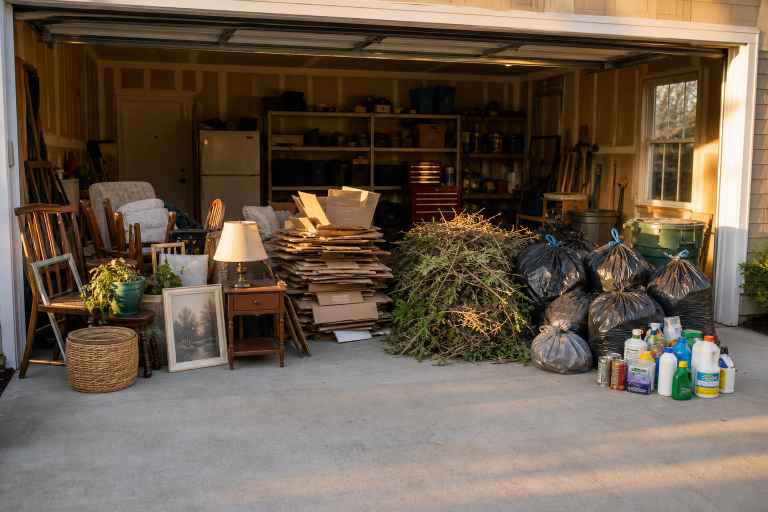
For example, during a garage reset, place tools and working equipment in the reuse zone, cardboard and containers in recycling, leaves in yard waste, and old fuel or batteries in the special-handling area. This prevents an item from being moved several times before its destination is decided.
A Room-by-Room Sorting Plan
Kitchen
Separate food scraps from packaging, and set aside small appliances that may be repaired, donated, or recycled as electronics. Check old cleaners, oven products, and drain treatments for hazardous ingredients. Wrap broken glass in sturdy paper or a rigid container, then label it clearly before disposal.
Garage and Workshop
Keep scrap metal, tires, lumber, tools, and mixed garbage in separate groups. Store oils, fuels, solvents, and batteries upright, away from heat and ignition sources. Never combine liquids, and never pour them into drains, onto soil, or into storm sewers.
Basement and Attic
Inspect stored boxes for moisture, mold, or pest damage before bringing them into living areas. Sort paper, cardboard, textiles, furniture, electronics, and damaged items separately. Pay particular attention to swollen, leaking, or corroded batteries, since they require careful handling.
Yard and Shed
Keep branches, leaves, grass clippings, soil, pots, and general garbage apart. Remove soil from reusable plant pots when possible. Treated wood, leftover paint, pesticides, and garden chemicals may need a different disposal route than ordinary yard materials.
The Five Main Waste Groups
- Reusable items: Clean, safe, complete furniture, clothing, dishes, tools, and working appliances may be useful to another person.
- Recyclable materials: Accepted paper, cardboard, containers, metals, electronics, and other recoverable materials should be kept clean and separated as required.
- Organic materials: Food scraps, leaves, grass, and approved natural waste belong in local organics or yard waste streams.
- General garbage: This includes materials that cannot be reused, recycled, composted, or handled through a special program.
- Special or hazardous waste: These products may leak, burn, react, poison, or injure people and require controlled handling.
Use one quick decision prompt for every item: Can someone use it, can a facility recover its material, or does it need controlled handling?
How to Handle Hazardous Items
Paint, cleaners, gasoline, motor oil, pesticides, propane cylinders, batteries, and nail polish remover can remain hazardous even when they are unwanted. The safe handling guidance for household hazardous waste emphasizes keeping products in original labeled containers whenever possible and avoiding the mixing of chemicals.
- Keep lids secured during storage and transport.
- Store products away from children, pets, direct sunlight, flames, and heat.
- Use a rigid container to contain a leaking product if it can be done safely.
- Contact the receiving facility for instructions on damaged, swollen, or unknown containers.
- Do not put hazardous products at the curb unless a local program specifically accepts them.
Large and Heavy Materials
Furniture, mattresses, appliances, drywall, tile, roofing materials, concrete, soil, and large branches often need additional planning. Measure bulky pieces before transport, break down clean cardboard, and keep dense materials low and balanced. Avoid overfilling trailers, pickup beds, bins, or containers.
A bathroom renovation is a good example. Tile, drywall, fixtures, cardboard, packaging, old paint, and reusable hardware should not be thrown together. Sorting them at the work area makes loading safer and helps keep recyclable or reusable materials from being contaminated.
Prepare Waste for Transport
- Wear sturdy gloves and closed-toe shoes.
- Use strong bags, boxes, or rigid containers for loose materials.
- Wrap sharp edges, glass, and broken pieces securely.
- Place heavy items at the bottom and distribute weight evenly.
- Keep liquids upright and away from dry items.
- Cover and secure every open load before driving.
- Confirm that the destination accepts each major material before leaving.
Ways to Reduce the Final Load
Disposal should be the last step for items that are truly unusable. Donate clean household goods, sell working tools and appliances, repair items that need minor fixes, or offer usable building materials to neighbors and community groups. Reusing boxes, containers, and packing materials can also reduce waste during a move or seasonal reset.
Common Disposal Mistakes
- Putting batteries in garbage: Use an approved battery collection or hazardous waste program.
- Mixing renovation debris with household waste: Separate materials before loading.
- Leaving extra bags beside a bin: Check collection limits and local requirements first.
- Pouring chemicals down drains: Keep products sealed and use a proper collection route.
- Overfilling a container: Leave enough space to cover and secure the load safely.
Final Checklist
- Have all items been sorted into clear categories?
- Have reusable goods been set aside before disposal?
- Have hazardous items been separated from regular waste?
- Have local rules, fees, and operating hours been checked?
- Are sharp, wet, dusty, and heavy materials packed safely?
- Is the final load balanced, covered, and secured?
Responsible waste disposal starts well before collection day or a trip to a facility. A few sorting zones, careful packing, and a quick review of local requirements can make a cleanout safer, faster, and less wasteful. The best result is not simply an empty room. It ensures that every item reaches the right next place.