Damage below a home often develops quietly, where floor joists, beams, sill plates, and support posts stay out of sight. Hidden moisture or movement can weaken those parts long before a floor feels soft or a door begins sticking. Early inspection helps connect those warning signs to the conditions affecting the framing underneath.
Standing Water Puts Framing Under Constant Moisture Stress
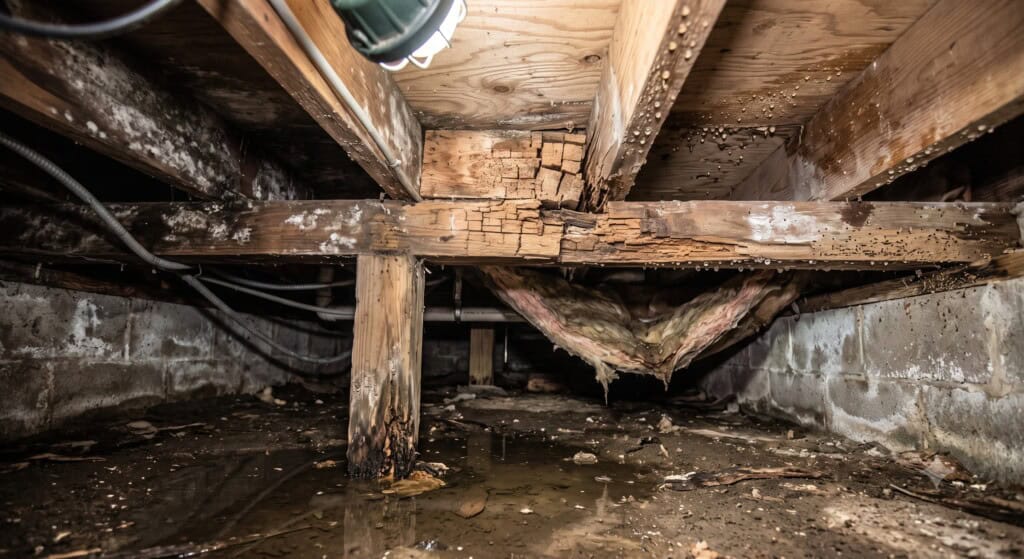
Groundwater that collects after storms keeps the crawl space damp and raises moisture levels in nearby lumber. Repeated wetting can soften beam ends, stain subflooring, loosen fasteners, and reduce the strength of wood at bearing points.
Puddles also show that water has nowhere dependable to go. Poor grading, clogged drains, short downspouts, or groundwater rising around the footing may keep the same area saturated.
Crawl space repair contractors trace the water before replacing damaged framing. Drainage channels, sump pumps, exterior runoff corrections, or other measures may be needed so repaired wood does not return to the same wet environment.
Can Humid Air Damage Wood Without Visible Leaks?
Humid air can keep joists and beams damp even when the soil looks dry. Warm outdoor air entering a cool crawl space may condense on ductwork, plumbing, metal connectors, and wood surfaces.
Condensation becomes especially troublesome during long stretches of hot, humid weather. Moisture that repeatedly forms on framing can encourage fungal activity, corrode hardware, and cause insulation to sag against the wood.
Homeowners searching for crawl space waterproofing near me should expect humidity readings to be part of the inspection. Vapor barriers, air sealing, controlled ventilation, or dehumidification may be recommended according to the source and severity of the moisture.
Exposed Ground Keeps Feeding Moisture Upward
Bare earth constantly releases water vapor into the air beneath a building. Recent rain makes that transfer more noticeable, but moisture can continue evaporating from the ground after the surface appears dry.
Over time, elevated vapor levels can raise the moisture content of sill plates, joists, beams, and subflooring. Wood does not need to touch wet soil directly for damp conditions to affect its strength or create favorable conditions for decay.
A properly installed ground vapor barrier limits that upward moisture movement. Anyone comparing crawl space repair near me should ask how seams, walls, piers, and utility penetrations will be treated because gaps can reduce the barrier’s effectiveness.
Small Plumbing and HVAC Leaks Create Localized Weak Spots
Small plumbing leaks can soak one framing bay for months before water reaches a visible ceiling or floor surface. Supply lines, drain fittings, condensate lines, and plumbing penetrations deserve close attention during a structural inspection.
Localized leaks often damage wood faster than general humidity because the same joist or beam remains wet continuously. Nearby nails, hangers, and bolts may rust while insulation holds moisture against the lumber and hides the problem.
Technicians performing crawl space repair in Huntsville AL should inspect HVAC equipment and ductwork for condensation or drainage failures. Correcting the leak first prevents new framing, reinforcement, or hardware from being installed beside an active moisture source.
How Does Wood Rot Change Structural Capacity?
Fungal decay breaks down the fibers that give lumber its stiffness and load-carrying ability. Beam ends, sill plates, rim joists, and areas around plumbing openings are trouble spots because moisture can remain trapped there.
Affected wood may feel soft, crumble under pressure, split around fasteners, or show unusual cracking and discoloration. Surface appearance alone cannot show how deeply deterioration extends, so inspectors may probe the member and take moisture readings.
Structural repairs depend on how much sound material remains. Sistering, partial replacement, new beams, or additional supports may be required, while moisture control keeps the repaired area dry enough to protect the new work.
Termites and Rodents Can Hide Damage Inside Framing
Termites can remove wood from the inside while leaving a thin outer surface that still looks intact. Mud tubes, discarded wings, hollow-sounding lumber, and damaged joist edges may reveal activity that was hidden for years.
Rodents create different problems by chewing wood, insulation, wiring, and flexible ducts. Nesting material can also hold moisture against framing, while openings around vents or utility lines provide routes into the crawl space.
Pest treatment and structural repair address separate parts of the problem. Qualified contractors determine whether damaged members still carry loads safely, while pest-control work removes the infestation and helps prevent renewed activity.
Shifting Piers Can Push Loads Into the Wrong Places
Support posts and piers transfer beam loads into footings and soil. Settlement, tilted blocks, undersized pads, loose shims, or softened ground can move those supports out of position and force nearby framing to carry extra weight.
Uneven support may produce sagging beams, joist deflection, floor slopes, cracked finishes, and doors that bind upstairs. Adding a post without evaluating the load path can simply move stress into another weak area.
Kennedy and Sons evaluates framing condition, moisture, drainage, pier stability, footing support, and other crawl space factors before recommending repairs. Their team can identify what is weakening the structure and develop a plan that addresses both damaged framing and the conditions contributing to it.