
Basements swallow light. Small windows, low ceilings, and gray concrete soak up whatever the fixtures give off, which is why so many of them feel like caves. A glossy coating on the floor changes that math, and the gains show up without touching a single bulb.
Why Do Basements Feel So Dark to Begin With?
Bare concrete absorbs most of the light that hits it. Its rough, porous surface scatters what little it reflects, so the room needs more fixtures to reach the same brightness as an upstairs space. Below-grade windows add to the problem, since they sit partly underground and admit only a thin slice of daylight.
Color matters just as much as texture. Dull gray slabs leave walls and ceilings doing all the work, and the whole room reads flat. Fixing the floor attacks the largest surface in the space.
How Does Epoxy Flooring Bounce Light Around a Room?
Cured epoxy forms a smooth, nonporous film, and smooth surfaces reflect light instead of swallowing it. Gloss finishes act almost like a low mirror, sending overhead light back toward the walls and ceiling. That secondary bounce fills corners that used to stay shadowed.
Sheen levels range from high gloss to satin. High gloss delivers the strongest reflection, while satin softens glare for rooms with bare bulbs or large windows. Clear topcoats also deepen color, so tones look richer under the same lighting.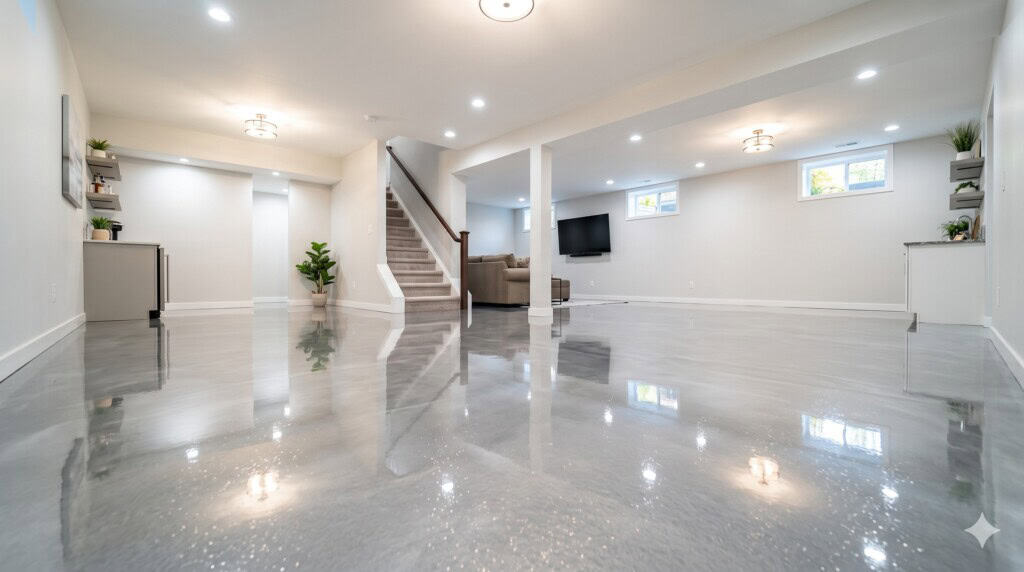
Which Colors and Finishes Brighten the Most?
Light shades lead the pack. Off-white, pale gray, sand, and soft tan reflect the most light and make low ceilings feel taller. Flake blends and quartz broadcasts add speckled texture that hides dust and small scuffs, which suits family basements where the floor sees daily use.
Metallic epoxy flooring takes a different approach. Pigments swirl through the resin and catch light from several angles, creating depth that shifts as people move through the room. Dark colors can look dramatic, though they demand more lighting to avoid a heavy feel.
Can Epoxy Handle a Damp Basement?
Moisture is the biggest risk below grade. Water vapor travels through concrete constantly, and a coating applied over a wet slab can bubble or peel. Installers run calcium chloride or relative humidity tests first, and a moisture-mitigating primer handles readings that run high.
Cracks and leaks need attention before any coating goes down. Hydrostatic pressure from outside groundwater is a drainage problem, not a flooring one, so grading and sump systems come first. Once the slab is stable, sealed epoxy blocks spills and humidity from soaking into the concrete and resists the mildew that thrives on porous surfaces.
Does Lighting Design Matter Once the Floor Is Coated?
It does, and a good plan multiplies the effect. Warm white or neutral bulbs bounce well off pale coatings, while cool blue light can look harsh on glossy finishes. Recessed fixtures spaced evenly across the ceiling avoid hot spots that glare on the surface.
Wall color completes the setup. Light paint on the walls and a reflective floor trade brightness back and forth, so the room needs fewer lamps overall. Owners often notice lower electricity use as a side effect.
Basement Epoxy Uses the Same Principles Found in Garage Systems
Homeowners familiar with an epoxy garage floor may recognize many of the same materials and preparation methods used for basement installations. Residential requirements can differ, however, because a basement may prioritize comfortable appearance and easy cleaning while garage floor coating must also account for vehicle tires, road debris, heavier abrasion, and automotive fluids.
Anyone searching for an epoxy floor company near me should describe how the basement will actually function, whether as a workshop, storage room, recreation area, home gym, or finished living space. Experienced epoxy flooring companies can then recommend an appropriate color, texture, coating build, and sheen instead of copying a garage specification onto a room with completely different needs.
A Brighter Floor Still Has to Perform as a Working Surface
Residential basements benefit most when appearance, moisture conditions, cleanability, and daily use are considered together. Although reflectivity can make the room feel brighter, durability still depends on substrate preparation, correct installation, compatible coating materials, and enough curing time before furniture or equipment returns.
Property owners looking for a well-built asphalt driveway, a durable concrete driveway, or an epoxy garage floor can turn to Pros LLC for surface work tailored to the space and expected use. The company handles asphalt paving, concrete paving, epoxy flooring, surface preparation, protective coatings, and other heavy-duty applications for residential, commercial, and industrial properties, with each project planned around traffic, drainage, wear, and long-term performance.