Key Takeaways
- Low pressure, sputtering faucets, frequent cycling, and unusual sounds can indicate a well-system problem.
- Pressure tanks, switches, clogged filters, leaks, and electrical faults can mimic pump failure.
- Homeowners can safely check visible components, but electrical and in-well work should be left to qualified professionals.
- Annual water testing and routine visual inspections can reveal concerns before a complete outage occurs.
- Flooding, major repairs, and sudden changes in water quality are good reasons to test well water.
For many homes outside Charlotte and across nearby rural and growing suburban areas, a private well is an essential part of daily life. Changes in water pressure, unusual noises, or cloudy water can be early signs that a well system needs attention. Understanding those warning signs helps homeowners decide when basic observation is enough and when water pump repair may be necessary.
A water problem does not automatically mean the pump has failed. The pressure tank, pressure switch, electrical supply, plumbing, filters, or the well itself can cause similar symptoms. Looking at the whole system before assuming the worst can help prevent unnecessary work and protect the home’s water supply.
How a Private Well System Works
A typical private well system includes the well, a pump, a pressure tank, a pressure switch, pipes, electrical controls, and sometimes filters or treatment equipment. A submersible pump sits inside the well, while a jet pump is installed above ground. Both types move water toward the home, where the pressure tank stores a small reserve and helps reduce the number of pump starts.
In Charlotte-area communities where new homes and rural properties can be close together, the condition of the well and the household’s water demand both matter. When a property needs a new water source or an existing well can no longer support its needs, well drilling is a separate process from repairing the pump or pressure equipment.
Early Warning Signs of Pump Trouble
Pay attention to changes that affect multiple fixtures, rather than a single sink or showerhead. A problem at one fixture may be local plumbing, but a whole-house change can point to the well system.
- Low or uneven water pressure: Pressure that falls during showers, laundry, or dishwashing may indicate restricted flow, a leak, or a pressure-control issue.
- Air sputtering from faucets: Air in the lines can occur when the water level is low, a pipe is leaking, or the system is drawing air.
- Long pump run times: A pump that seems to run without stopping may be struggling to build pressure or may be responding to a leak.
- Rapid cycling: Repeated on-and-off operation, every few seconds or minutes, often involving the pressure tank, the switch, or a loss of pressure.
- Unusual sounds: Clicking near controls, humming, grinding, or vibration should be noted and investigated.
- Cloudy or sandy water: Sediment can signal changes within the well, worn equipment, or disturbances after repair work.
- Repeated breaker trips: A breaker that trips again after one reset can indicate an electrical or motor-related fault.
What May Be Causing the Problem
Pressure Tank and Switch Issues
A waterlogged tank, damaged internal bladder, or incorrect air charge can contribute to short cycling. A pressure switch may also fail to start or stop the pump properly when its contacts are worn or its sensing port is blocked. These parts can cause symptoms that resemble a pump failure even when the pump itself is still operating.
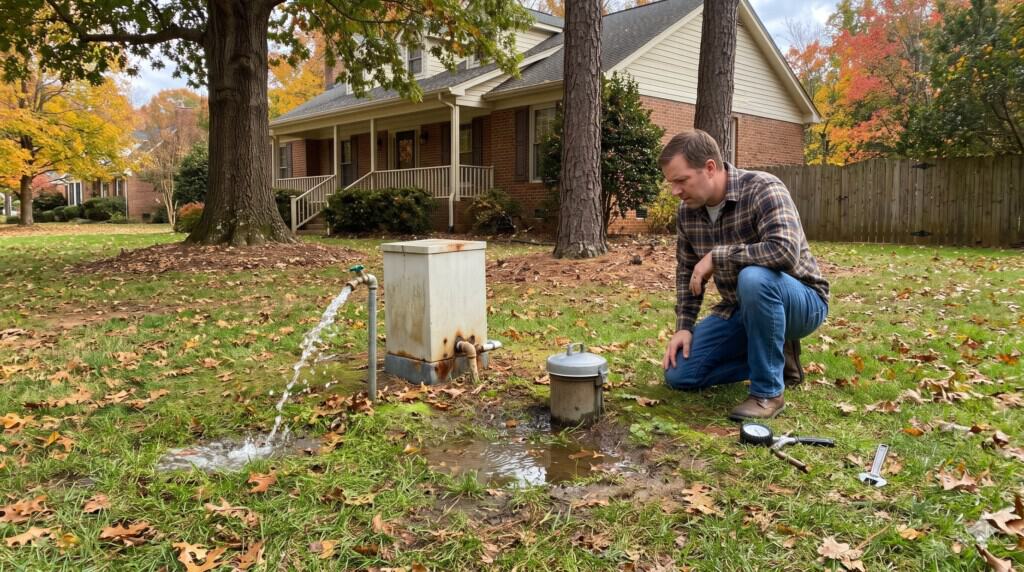
Photorealistic wide establishing shot of a rural Charlotte-area home with a private well system, showing the house, surrounding grassy yard, wooded landscape, and a small well pump or pressure tank enclosure in the foreground, under natural daylight, in a realistic residential setting, conveying the scale and context of a private well water system.
Electrical, Plumbing, and Well Conditions
Tripped breakers, loose wiring, damaged control boxes, and electrical surge damage can interrupt pump operation. On the plumbing side, clogged filters, leaking pipes, blocked lines, or a failing check valve may reduce pressure. Low water levels, sediment, a damaged drop pipe, or wear inside the pump can also affect performance.
Safe Checks Homeowners Can Make
Before arranging service, homeowners can gather useful details without opening electrical equipment or making mechanical adjustments:
- Confirm whether the issue affects the entire home or one fixture.
- Check the visible pressure gauge, if the system has one, and note its reading.
- Look around the pressure tank and exposed pipes for water, corrosion, or obvious leaks.
- Check the electrical panel for a tripped breaker. Reset it only once if there is no burning smell, standing water, or damaged wiring.
- Listen near the tank or control area for clicking, humming, or repeated cycling.
- Review filter replacement needs according to the manufacturer’s instructions.
- Write down when the problem began and which symptoms appeared first.
Do not open control boxes, adjust pressure-switch settings, pull a pump, or enter a flooded well or pump area without appropriate training. Water and electrical equipment can create a serious shock hazard.
When to Call a Professional
Professional diagnosis is appropriate when there is no water throughout the home, the pump runs continuously, the breaker repeatedly trips, water contains heavy sediment, or wiring appears damaged. Prompt help is also sensible when a burning odor is present, pressure drops throughout the house, or a reset only temporarily restores service.
For major work, ask what caused the failure, which components were tested, whether repair is practical, and what warranty applies to the proposed work. North Carolina homeowners can use the state’s certified contractor information when checking qualifications for well-related services.
Repair or Replacement?
Repair may be reasonable when the problem involves an accessible switch, gauge, filter, valve, pressure tank, or wiring connection. Replacement may be a better option when testing confirms motor failure, severe sediment wear, repeated equipment damage, or insufficient performance for the household’s needs. A written estimate can help homeowners compare the immediate repair cost with the expected reliability of a replacement.
A Simple Maintenance and Water-Quality Plan
- Once a month, inspect exposed components for leaks, broken covers, corrosion, or physical damage.
- Listen for changes in cycling patterns and record recurring pressure problems.
- Maintain filters and treatment equipment on the schedule provided for that equipment.
- Keep records of repairs, water tests, disinfection, and changes in water appearance or odor.
- Test private well water at least annually and after repairs, flooding, land disturbance, or noticeable changes in taste, odor, or color. The EPA recommends these steps for protecting a home’s well water.
Flooding deserves particular caution because surface contaminants may enter the well system. Avoid using visibly contaminated water for drinking or food preparation, and contact a local health department or certified laboratory for guidance on testing and next steps.
Common Questions About Well Pump Problems
Does low water pressure always mean the pump is failing?
No. A clogged filter, a leak, a worn pressure tank, a pressure-switch problem, or a low well-water level can also reduce pressure.
Is it safe to reset a well-pump breaker?
One reset may be appropriate when there are no visible warning signs. If it trips again, leave it off and arrange professional testing.
Should well water be tested after pump repairs?
Testing is especially wise after major well work, flooding, or any change in water quality. Repairs can disturb sediment, and testing provides information that appearance alone cannot confirm.
Well pump problems often give homeowners time to respond before a complete loss of water occurs. By tracking pressure changes, sounds, cycling behavior, and water-quality shifts, Charlotte-area well owners can make safer, more informed maintenance decisions.