Property easement disputes in North Carolina can quietly escalate from a disagreement between neighbors into a full legal conflict that affects the use, value, and marketability of your land for years. Whether you own residential property in a Charlotte suburb, farmland in a rural Piedmont county, or commercial real estate along a Raleigh corridor, understanding how easements work under North Carolina property law and what your options are when a dispute arises is essential to protecting what you own.
What Is a Property Easement and Why Do Disputes Arise?
A property easement is a legal right that allows someone other than the landowner to use a specific portion of a property for a defined purpose. Easements are incredibly common across North Carolina, appearing in nearly every residential subdivision, rural tract, and commercial development in the state, and most of the time they function without any conflict at all.
Disputes arise when the scope, location, or existence of an easement is unclear, when a new property owner discovers an easement they were not adequately informed about at closing, or when one party begins using an easement in a way that exceeds what was originally granted. A neighbor in a Wake County subdivision who begins using a utility easement as a personal driveway, a timber company claiming the right to cross a Piedmont farm based on a decades-old deed reference, or a developer in Mecklenburg County who blocks an established path that adjoining landowners have used for generations are all examples of how easement conflicts begin.
These disputes carry real financial consequences. An unresolved easement conflict can prevent a property sale, trigger expensive litigation, and permanently alter how land can be used and developed.
What Does North Carolina Property Law Say About Easements?
North Carolina property law recognizes several distinct categories of easements, and the legal rules governing each category determine how disputes are resolved. The type of easement involved in your situation shapes every aspect of the legal analysis.
The main categories recognized under North Carolina law include:
- Express easements: Created by a written document, typically recorded in the county register of deeds, that explicitly grants the right to use a portion of land for a stated purpose
- Implied easements: Arising from the circumstances of a property transaction rather than a written document, often when land is divided and one parcel requires access across another to reach a public road
- Easements by necessity: Recognized when a parcel is completely landlocked and has no other means of accessing a public road, requiring a court to establish a legal access route
- Prescriptive easements: Similar to adverse possession, these arise when someone has used another person’s land openly, continuously, and without permission for at least 20 years under North Carolina law
- Conservation easements: Voluntarily placed restrictions that limit development on land in exchange for tax benefits, often used on agricultural and forested tracts throughout rural North Carolina
Each type comes with its own rules for creation, scope, and termination, and misidentifying the category of easement at issue can lead to entirely incorrect legal conclusions about your rights.
How Are Easement Disputes Handled Under North Carolina Property Law?
North Carolina property law provides several legal mechanisms for resolving easement disputes depending on the nature of the conflict and what outcome the affected landowner needs. Some disputes can be resolved through negotiation and written agreement. Others require court intervention to establish, modify, or terminate an easement.
Navigating North Carolina property easement disputes effectively requires understanding which legal tool fits the specific conflict you are facing, because pursuing the wrong remedy wastes time, money, and often worsens the relationship between neighboring landowners. A quiet title action is appropriate when the very existence or ownership of an easement is in question. A trespass or nuisance claim may be the right approach when an easement holder is using the land in a way that exceeds their granted rights. A declaratory judgment action works well when both parties need the court to clarify the scope and boundaries of an existing easement.
Courts in North Carolina look carefully at the original language creating the easement, the intent of the parties at the time it was created, and how the easement has been used over time when resolving these conflicts.
Common Easement Disputes Seen Across North Carolina
Easement conflicts in North Carolina arise in a wide variety of contexts, from urban neighborhoods in Charlotte and Raleigh to rural tracts in Guilford, Forsyth, and Brunswick Counties. Some disputes involve relatively simple disagreements about boundaries. Others involve complex historical questions about what was intended when land was divided decades ago.
Common disputes that North Carolina landowners encounter include:
- A utility company claiming the right to access and expand infrastructure across a residential property in a Cary or Apex neighborhood based on a vaguely worded easement in the original subdivision plat
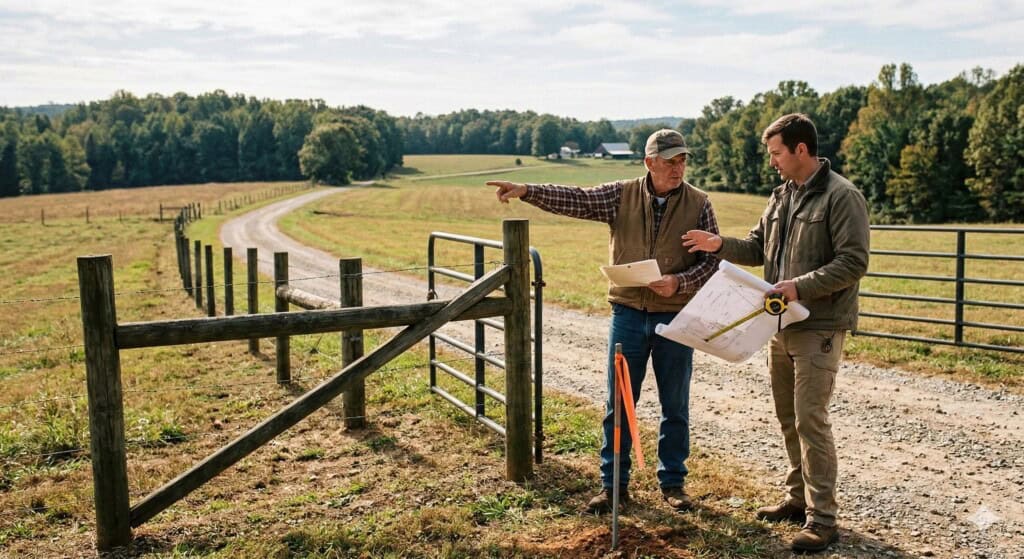
- An agricultural landowner in a rural Piedmont county discovering that a neighbor has claimed a prescriptive easement across their fields based on years of unauthorized tractor access
- A coastal property owner in Brunswick or Dare County who learns that a recorded beach access easement running across their lot predates their purchase and was never disclosed during the transaction
- A residential developer in a growing Charlotte suburb attempting to build over or adjacent to an established drainage easement, triggering objections from neighboring property owners and local government
- A landlocked rural parcel in a western North Carolina mountain county whose owner discovers after purchase that the only practical road access crosses a neighbor’s land and is not covered by any recorded easement
Each of these situations requires a different legal strategy, and the outcome depends significantly on the quality of the initial title search, the clarity of the recorded documents, and how quickly the affected landowner seeks legal guidance after the conflict surfaces.
What Is a Prescriptive Easement and How Does It Affect North Carolina Landowners?
A prescriptive easement is acquired when someone uses another person’s land openly, continuously, without the owner’s permission, and in a manner hostile to the owner’s interests for a statutory period of 20 years under North Carolina law. Once established, a prescriptive easement is legally binding and can significantly limit what a landowner can do with their own property.
This type of easement is particularly common in rural areas of North Carolina where informal access arrangements between neighbors have gone on for generations without any written documentation. A path used by a neighboring farmer to reach a back field, a road crossing a timber tract used by hunters for decades, or a driveway shared informally between adjoining landowners in a Piedmont community can all potentially give rise to a prescriptive easement claim if the legal elements are met.
Landowners can prevent prescriptive easements from forming by posting their property, blocking access periodically, or granting a written license that makes clear the use is permissive and not hostile. Taking these steps proactively is far easier and less expensive than litigating a prescriptive easement claim after it has already matured.
How Easement Disputes Affect Property Value and Marketability in North Carolina
Easement disputes directly affect a property’s market value and its ability to be sold, refinanced, or developed. Title insurance companies routinely flag unresolved easement conflicts during the underwriting process, which can delay or kill a closing entirely.
Specific ways easement disputes affect North Carolina properties include:
- A cloud on title that prevents a clean sale until the dispute is resolved through litigation or a recorded agreement
- Lender refusal to approve financing on a property with an unresolved access or boundary easement conflict
- Reduced appraisal value when an easement significantly limits the usable area or development potential of the land
- Inability to obtain building permits for improvements that encroach on or too closely approach a recorded easement area
- Buyer withdrawal after discovery of an undisclosed or disputed easement during the due diligence period
Resolving these issues before listing a property, refinancing, or beginning a development project protects both the financial value of the land and the timeline of any planned transaction.
Steps to Take When Facing an Easement Dispute in North Carolina
Taking organized and prompt action when an easement dispute arises gives you the best possible position throughout the resolution process. Waiting allows the other party to establish facts on the ground and can complicate your legal options considerably.
Steps to take as soon as a dispute surfaces:
- Obtain a copy of the deed, plat, and all recorded easement documents from the county register of deeds
- Commission a current survey of the property that clearly identifies the location and boundaries of any recorded easements
- Document the current and historical use of the disputed area through photographs, written records, and neighbor accounts
- Review your title insurance policy to determine whether easement disputes are covered and whether a claim should be filed
- Avoid taking self-help measures like blocking access or removing improvements without legal guidance, as these actions can create additional liability
- Consult with a North Carolina property attorney before communicating formal positions to the other party
- Explore mediation as a first step in cases where the relationship with the neighboring landowner matters or where litigation costs would be disproportionate to the value at stake
The North Carolina Real Estate Commission provides property disclosure and transaction resources at ncrec.gov that can be a helpful reference for understanding what sellers and buyers are required to disclose about easements and property encumbrances during real estate transactions across the state.
Final Thoughts for North Carolina Landowners Facing Easement Conflicts
Whether your easement dispute involves a neighbor in a Raleigh subdivision, a utility company claiming access across your Triad-area property, a landlocked parcel in the mountains of western North Carolina, or a coastal lot in Brunswick or Carteret County, the legal principles governing your situation are the same and the stakes are real.
Easement conflicts do not resolve themselves over time. They typically become more entrenched, more expensive, and more damaging to property value the longer they are left unaddressed. Getting accurate legal information early, understanding the type of easement at issue, and working with counsel familiar with North Carolina property law gives you the clearest path to a resolution that protects both your land and your investment.