A sudden fall can leave someone dealing with pain, bills, missed work, and questions about who may be responsible. Huntsville properties include stores, apartment complexes, medical offices, restaurants, sidewalks, and parking lots where unsafe conditions can cause serious injuries. Legal review focuses on the facts behind the fall, not assumptions about clumsiness or bad luck.
Why Fall Injuries in Huntsville Deserve a Careful Legal Review
Falls often happen because of hazards that property owners should have noticed. Wet floors, broken pavement, loose mats, poor lighting, unstable railings, and uneven steps can create risks for customers, tenants, workers, and visitors.
Local conditions also matter. A personal injury lawyer in Huntsville AL may review the property type, weather, lighting, maintenance practices, and inspection history to see whether the owner acted reasonably before the injury occurred.
How a Personal Injury Attorney Looks at the Accident Scene
Scene evidence can disappear fast after a fall. Employees may mop the floor, move a warning sign, fix a loose board, or repair cracked concrete before the injured person understands how important that proof could be. Photos, video footage, incident reports, measurements, and witness names help preserve what the area looked like at the time of the accident. A personal injury attorney may use those details to show whether a hazard existed and whether it was obvious, hidden, temporary, or long-standing.
Property Owner Responsibility After a Dangerous Condition
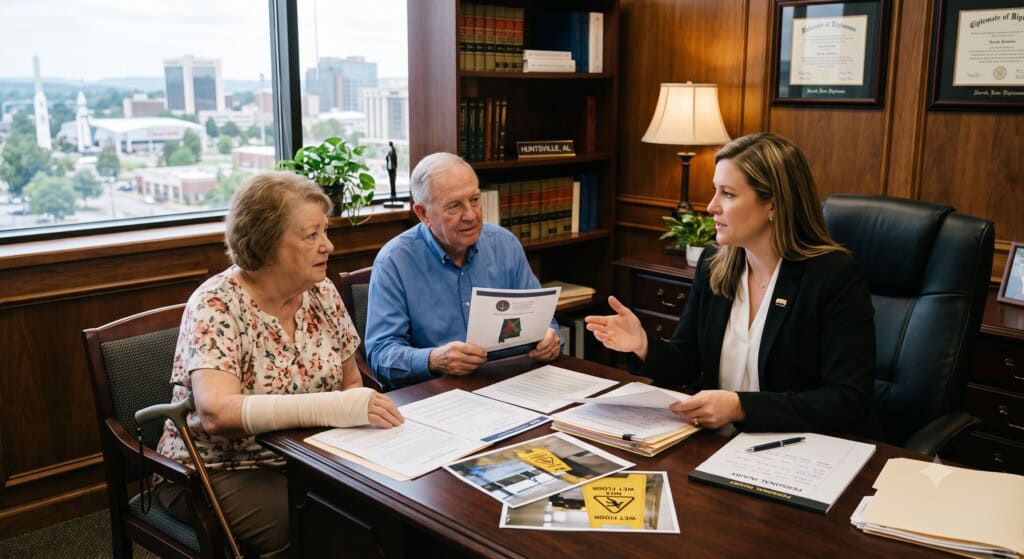
Alabama fall injury claims often depend on whether the property owner knew or should have known about the hazard. Liability may be harder to prove if the danger appeared only seconds before the fall, but stronger evidence may exist when the condition was visible, repeated, or reported earlier. Business owners and landlords are generally expected to inspect areas where people walk. A personal injury lawyer may review cleaning logs, repair requests, tenant complaints, employee notes, and prior accident reports to determine whether the owner ignored a preventable danger.
Medical Records That Help Connect the Fall to the Injury
Doctors’ records can show how the fall affected the body. Emergency room notes, imaging results, orthopedic evaluations, physical therapy records, and follow-up visits may connect the accident to injuries such as fractures, torn ligaments, back pain, head trauma, shoulder damage, or hip injuries. Insurance companies may question whether symptoms came from the fall or from an older condition. A personal injury lawyer near me search often begins after the injured person realizes that clear medical documentation can help explain timing, diagnosis, treatment needs, and lasting physical limits.
Witness Statements That Add Detail Beyond the Paperwork
Witnesses may remember facts that never make it into an incident report. Customers, tenants, employees, or nearby visitors might recall a spill, a broken step, a missing cone, a dark stairwell, or a worker saying the problem had already been reported.
Fresh accounts carry more value than memories collected months later. Accident attorneys near me may contact witnesses early so details remain accurate and the case does not rely only on the property owner’s version of events.
Store, Apartment, and Parking Lot Hazards Commonly Reviewed
Retail stores often involve wet floors, loose rugs, falling merchandise, narrow aisles, or tracked-in rain near entrances. Apartment buildings may involve broken stairs, poor lighting, loose handrails, uneven walkways, and neglected common areas.
Parking lots bring another set of risks, including potholes, cracked pavement, faded curbs, debris, poor drainage, and unsafe ramps. A personal injury attorney studies where the fall happened because each location has different inspection duties and maintenance records.
Why Timing Can Make or Break a Fall Injury Claim
Timing helps show whether a property owner had a fair chance to fix the hazard. A spill that sat for thirty minutes is different from one that happened moments before a customer walked by.
Security footage, receipts, employee schedules, cleaning checklists, and weather reports may help establish that timeline. A personal injury lawyer can compare those records to the owner’s safety policies and determine whether the response was reasonable.
Warning Signs, Barriers, and What They Really Prove
Warning signs do not automatically protect a business or landlord from responsibility. A sign must be visible, close enough to the hazard, and placed before someone reaches the dangerous area.
Barriers may matter even more when the risk cannot be fixed right away. Bright cones, caution tape, blocked access, or temporary repairs may show an effort to protect visitors, while missing or poorly placed warnings may point to careless property management.
Damages That May Be Reviewed After a Serious Fall
Compensation in a fall injury claim may involve more than the first medical bill. Lost income, follow-up appointments, therapy, prescriptions, mobility aids, transportation costs, pain, and reduced daily activity can all become part of the review. Recovery can also affect family life, work duties, sleep, and independence. A personal injury lawyer may evaluate how the injury changed the person’s routine and whether future treatment or long-term limitations should be included in the claim.
Getting Local Guidance Before Evidence Disappears
Early legal guidance can help protect evidence before repairs, deleted footage, or incomplete reports make the claim harder to prove. Wolfe Jones helps people understand how fall injuries in Huntsville are reviewed, what property records may matter, and how a personal injury lawyer can evaluate whether unsafe conditions contributed to the accident.