
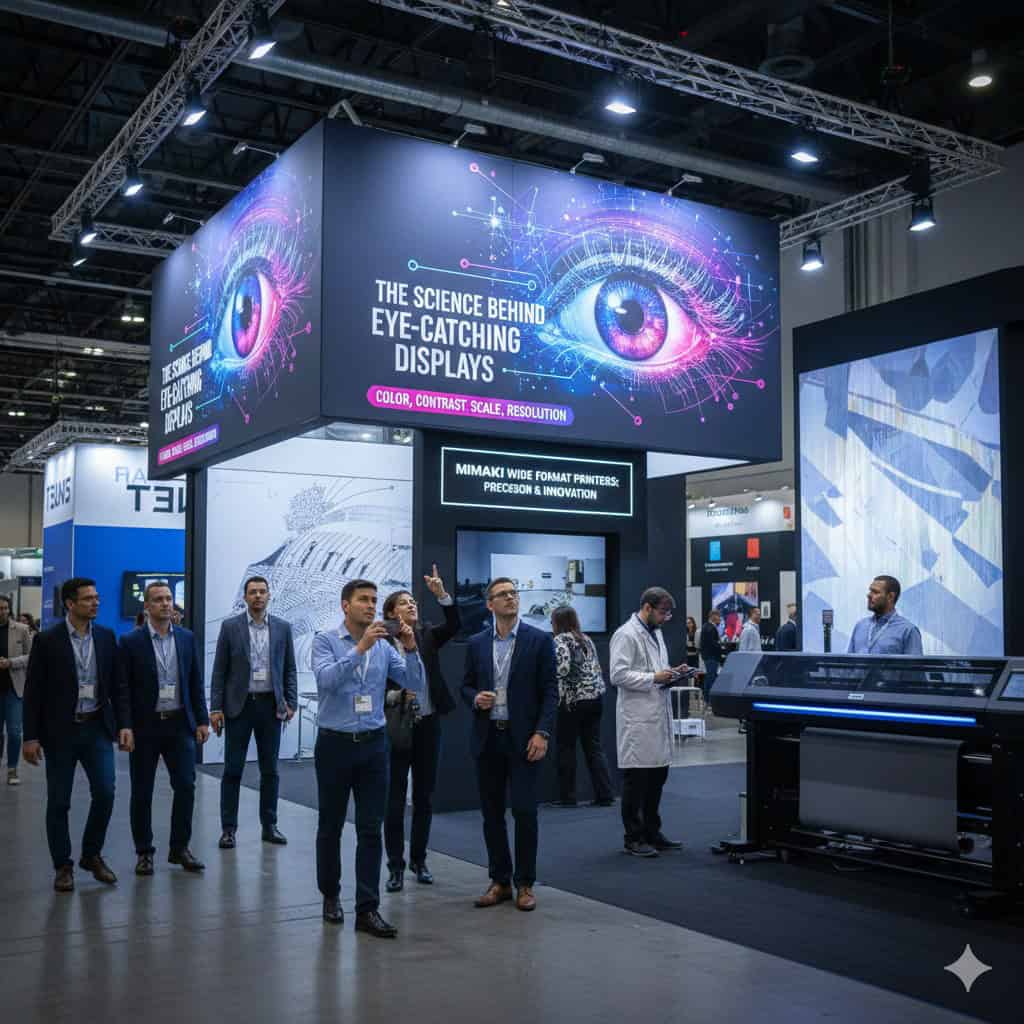
Eye-catching displays don’t happen by accident. Behind every striking banner, retail graphic, or exhibition stand lies a careful blend of psychology, material science, and production technology. While creativity sets the vision, it’s the science of how people see, process, and remember visuals that determines whether a display truly works.
How the Human Eye Interprets Visuals
The human brain processes images far faster than text. Color, contrast, scale, and movement are all interpreted almost instantly, which is why strong displays rely on bold visual cues rather than detailed explanations. High contrast helps key messages stand out, while color combinations can evoke emotional responses such as excitement, trust, or urgency.
Layout also plays a role. The eye naturally follows patterns and hierarchy, meaning well-structured designs guide viewers effortlessly from the most important element to supporting details. When these principles are applied correctly, displays feel intuitive rather than overwhelming.
Color Accuracy and Resolution
One of the most overlooked scientific elements of impactful displays is color accuracy. The wrong shade or dull output can weaken a message, even if the design itself is strong. High resolution is equally important, especially for large-format graphics where imperfections become more noticeable at scale.
This is where production technology makes a significant difference. Using a Mimaki wide format printer allows designers and print professionals to achieve precise color reproduction and sharp detail, ensuring that the final display matches the original creative intent. Consistency across multiple prints also helps maintain brand integrity across locations or campaigns.
Materials Matter More Than You Think
The surface on which a design is printed affects how it is perceived. Matte finishes reduce glare and can feel more refined, while gloss finishes enhance vibrancy and contrast. Textured materials can add depth and interest, influencing how long a viewer engages with the display.
Scientific testing of inks and substrates ensures durability, colour stability, and resistance to fading. Displays that maintain their visual impact over time are far more effective than those that degrade quickly under lighting or environmental exposure.
Distance, Scale, and Viewing Angles
Displays are rarely viewed up close and head-on for long periods. The science of viewing distance plays a key role in determining font size, image clarity, and layout spacing. What looks perfect on a screen may become unreadable from across a room if scale isn’t properly considered.
Wide format printing allows for controlled testing and adjustments, helping ensure that visuals remain clear and impactful from various distances and angles. This is particularly important for exhibitions, retail environments, and outdoor displays where attention must be captured quickly.
Combining Science and Creativity
The most successful displays sit at the intersection of creative design and scientific understanding. Designers bring the concept, but technology and material science bring it to life in a way that resonates with human perception.
By understanding how color, resolution, materials, and scale influence attention and memory, businesses can create displays that don’t just look good but actively communicate and persuade.
Why Production Quality Completes the Picture
Even the most well-researched design can fall short if production quality is lacking. Precision printing ensures that the science behind the design is fully realised, from accurate color profiles to flawless image reproduction.
In a competitive visual landscape, investing in the right equipment and processes transforms good ideas into powerful visual experiences. Eye-catching displays are not just about aesthetics; they are the result of science working quietly behind the scenes to make messages impossible to ignore.