
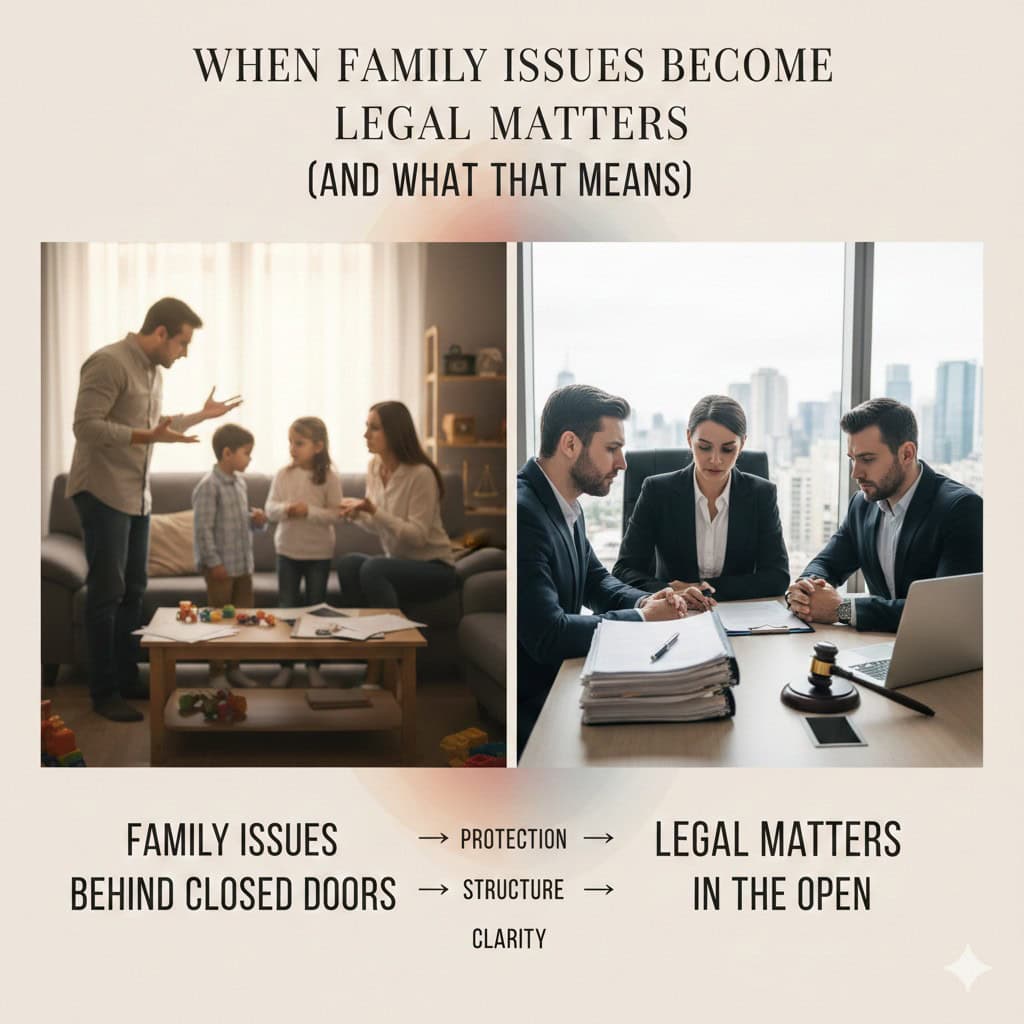
Most family disputes are conducted behind closed doors—between a couple, a family makes decisions about their children, and a household divvies up finances. However, when such informal agreements are no longer tenable, trust has been broken, situations have turned complicated, or future stability needs to be ensured and what was once a private matter becomes a legal one. Knowing when that happens and why it matters allows people to navigate transitions and transformations more effectively for the benefit of all involved.
The Problem with Informal Agreements
Many couples who separate do so on good terms. They’ll split everything evenly, they’ll take care of the kids, they’ll do it without lawyers. And sometimes it works, at least for a little while. But informal agreements are not without their pitfalls that don’t become clear until it is too late.
Without legal documentation, there is no recourse if someone changes their mind. There’s no protection if circumstances change and one party wants to renegotiate the entire agreement. There is no clear idea of what was agreed to when recollections differ months down the line. What seems like an equitable agreement in the moment becomes an ongoing source of contention down the line when there are no legal underpinnings to support it.
This is where consulting a family lawyer becomes valuable, not because the situation requires conflict, but because proper legal documentation protects agreements that both parties have already made. Legal backing transforms good intentions into enforceable arrangements that provide security for everyone involved, particularly children whose stability depends on consistent arrangements.
The Shift from Family to Legal Matter
Once something is legally under a family context, informal discussions become rigid processes. There are established parameters within a court of law that dictate what will happen with property division, custody and financial settlements. These all take into account information that people may overlook—future earning potential, non-monetary contributions to the relationship, children’s interests beyond parental ones.
This does not mean that everything becomes contentious. Many family issues go to resolution through consent orders and not through contested hearings. But there is legal structure that supports what otherwise, informal agreements lack. Everything gets weighed accordingly, frustrations are justified if there’s ever a dispute later on down the line because it’s put into the record. The opportunity exists for enforcement if one party fails to follow directions.
There are also timelines and stipulations that don’t exist in informal conversations. An application needs to be submitted; documents need drafting. Courts aren’t open 24/7 and they don’t exist on people’s schedules. Knowing those limitations and requirements from the get-go prevents future mishaps and missed opportunities, especially when it comes to settling property post-separation, as there are time frames by which decisions must be made.
Professional Help Is Not Always Needed
Sometimes, people can get away with simple and cheap uncontested separations that do not require much legal endeavor. If couples do not have children, they have minimal assets and they’ve been married for a short time—or if they have children and been married longer but come to an equitable agreement on every level—basic legal documentation could be all that’s necessary.
However, it’s important to note—and most family lawyers will tell clients this—that situations become complicated more often than not. Hidden bank accounts and divorce money stem from stressors either covered or uncovered during family separation discussions, special occasions must be noted in terms of custody agreements and financial negotiations should take into account future plans instead of just present realities.
A legal professional helps uncover those discrepancies before they become problems to avoid unnecessary litigation costs down the line. Family lawyers pick up on issues that people cannot see through their emotional vortexes as they undergo separation processes without knowledge of what could tangentially impact their agreements. A family lawyer focuses purely on this tangential matter while people focus on emotional adjustment and practical transitions.
How Litigation Provides Protection
Legal proceedings provide protections that informal arrangements cannot include. Court orders are enforceable as are binding financial agreements that prevent future claims against one another. Custody arrangements, where documented with efforts and execution take on a more definitive nature that avoids constant conflict over minutiae.
These protections matter most when circumstances change. Someone loses their job, remarries, relocates, or faces health issues. Children’s needs shift as they get older. Property values change. Without proper legal documentation from the beginning, these changes can reopen settled matters and create new disputes.
Furthermore, legal proceedings hold power imbalances in check without vulnerability in relationships. When one person knows more about finances, has access to assets or is more financially secure than the other party or has the negotiating position of custody arrangements thanks to a new partner, informal arrangements occur that are unfair settlements. Courts seek legal counsel/family lawyers/intervention to ensure settlements are fair regardless of who has the upper hand in negotiation.
Making The Transition
Transitioning from private matters to family legal proceedings doesn’t mean surrendering autonomy or engaging in months-long court battles. It means generating structure to expert advice regarding decisions made for long-lasting stability at stake. It means validating appreciation made without subsequent efforts amidst contention down the line, documenting transactions legally for everyone’s benefit—even children—who need structure based on previously established guidelines. Ultimately, recognizing when legal advice becomes necessary and seeking it out sooner than later before problems evolve, creates better situations with less conflict and assures an easier path moving forward with greater certainty about what’s next for everyone involved.