
A boat dock can be one of the biggest expenses that comes with owning waterfront property, but the purchase price only tells part of the story. Materials, maintenance, repairs, and how well the structure handles changing water conditions all affect what owners spend over time. A heavy-duty aluminum floating dock may cost more initially, yet its long-term benefits can make it a better financial decision than a cheaper alternative.
Lower Maintenance Costs Over the Life of the Dock
Wooden docks need regular attention because moisture, sunlight, and constant exposure to water gradually wear down their surfaces. Owners often spend money replacing damaged boards, tightening loose fasteners, and applying protective coatings. Aluminum boat docks eliminate much of that work because their structural frames do not absorb water, rot, or attract wood-boring insects.
Maintenance expenses still exist, particularly for decking, flotation components, connections, and anchoring hardware. However, aluminum structures generally require fewer material-related repairs than traditional wood docks. Over several years, those avoided expenses can offset part of the higher purchase price, especially on properties where contractors charge extra for waterfront access.
How Aluminum Construction Cuts Down on Repairs and Replacements
Structural deterioration often starts in areas that owners cannot easily inspect. Water collects around joints, fasteners loosen under repeated movement, and untreated wood can decay beneath otherwise sound decking. Heavy-duty aluminum docks use corrosion-resistant frames that avoid many of these problems, although connections and other metal components still need periodic inspection.
Quality construction matters just as much as the material itself. Properly engineered aluminum frames distribute loads across supporting members, while suitable fasteners and isolation methods help limit galvanic corrosion between dissimilar metals. Buyers comparing aluminum docks for sale should examine frame design, connection details, flotation capacity, and manufacturer warranties rather than judging durability by appearance alone.
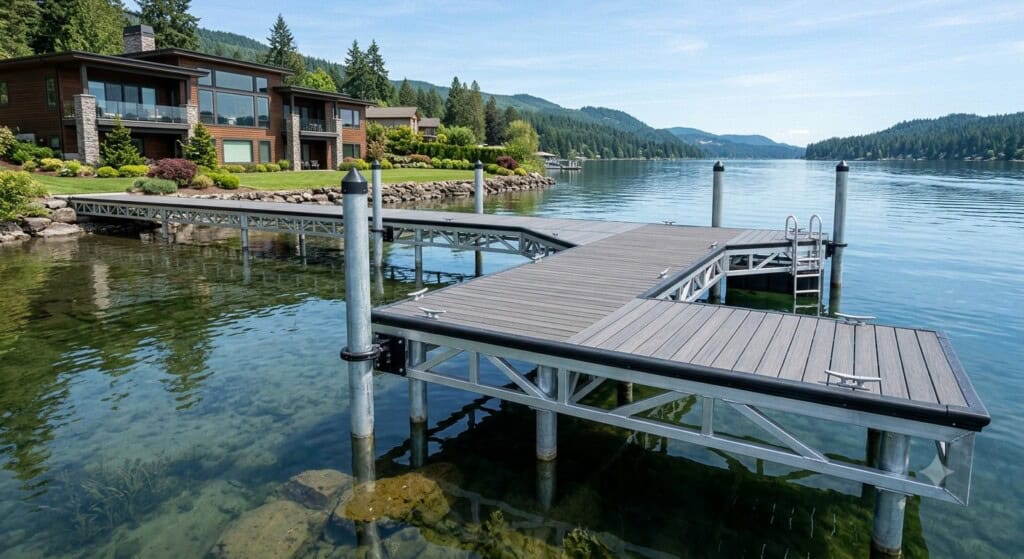
The Cost of a Heavy-Duty Dock Compared to Cheaper Alternatives
An inexpensive dock may seem attractive until repair bills begin adding up. Basic wooden platforms and lightweight modular systems can have lower initial costs, but their long-term expenses depend on material quality, exposure, and how heavily people use them. A dock serving several boats or supporting regular foot traffic needs more structural capacity than a small swimming platform.
Comparing prices also means looking beyond the advertised dock package. Delivery, installation, anchoring, decking, accessories, and permits can significantly affect the total project cost.
For example, a cheaper dock that requires major repairs after several seasons could cost more over its useful life than a properly maintained aluminum system. Waterfront owners should compare estimated annual ownership costs, not just purchase prices, and account for expected repairs and eventual replacement.
How a Well-Built Floating Dock Can Affect Waterfront Property Value
Waterfront buyers often consider dock access alongside the house, shoreline, and available water depth. A sturdy, functional dock can make a property more appealing because the next owner may not need to arrange an expensive installation immediately. Its actual contribution to resale value, however, depends on local demand, the condition of the structure, and whether the dock meets applicable regulations.
Appraisers do not automatically assign a dollar-for-dollar increase based on installation costs. Instead, they may consider comparable waterfront sales and the usefulness of existing improvements. An aluminum floating dock with convenient boat access, appropriate slip dimensions, and sound anchoring can strengthen a property’s overall appeal, particularly in boating communities.
Longer Service Life in Changing Water and Weather Conditions
Lake levels can rise and fall considerably during a single year. Fixed docks may become difficult to access during low water or sit partially submerged during flooding. Floating systems move vertically with the water, helping maintain a more consistent relationship between the deck and a boat.
That movement does not make the structure immune to damage. Strong winds, wakes, debris, and sudden water-level changes still place stress on dock connections and anchoring equipment.
Experienced floating dock builders account for these forces when selecting flotation capacity, anchoring arrangements, and structural components. Proper engineering reduces unnecessary strain and helps prevent movement that could damage the dock or nearby boats.
Less Time and Money Spent on Seasonal Dock Maintenance
Seasonal maintenance can become a significant expense for waterfront owners who hire contractors to handle repairs and inspections. Wooden structures may need sanding, staining, or replacement boards, while exposed hardware requires attention after storms or periods of heavy use.
Aluminum docks reduce much of that recurring surface work. Owners should still remove debris, check flotation units for damage, inspect anchoring lines, and examine connections before busy boating seasons. These manageable tasks help catch problems early without the extensive refinishing associated with many wooden structures.
What Makes an Aluminum Floating Dock Worth the Upfront Investment
Long-term value comes from matching the dock to its intended use. Frame strength, flotation capacity, decking materials, and anchoring design determine whether the structure can safely support normal boating activities. A well-designed system should also account for future maintenance access and changing shoreline conditions.
People researching aluminum boat docks for sale benefit from comparing complete systems rather than individual components. Manufacturers that offer customized configurations can address unusual shorelines, fluctuating water levels, and specific boat dimensions before installation begins.
Flotation Systems manufactures custom aluminum floating and stationary docks for residential and commercial waterfront properties. Its floating dock systems offer different configurations and anchoring options suited to varying site conditions. Property owners considering a long-term investment can review these designs to better understand how construction quality, customization, and maintenance requirements affect the overall cost of dock ownership.